F-1 , heaven mall, zarar Shaheed road lahore
DevSol Hub That Ensures Your IT Runs Seamlessly, Anytime and Every Time

At Devsol Hub, we bring together creativity and technology to build websites and designs that help brands shine online with confidence.


Most businesses don't know what custom software actually costs. They get a quote and feel lost. Custom software development cost in 2026 ranges from $25,000 to $500,000+. It depends on three clear metrics. First, the project price covers the full build scope. Second, the hourly developer rate runs $25 to $200 based on region. Third, the cost per feature helps break big projects into budget-friendly steps. We've seen small businesses overpay simply because no one explained this breakdown early.
The MVP cost usually starts around $25,000 to $50,000 for core features only. Enterprise software cost climbs higher, often hitting $200,000 to $500,000. SaaS development pricing sits in the middle, typically $75,000 to $150,000. These numbers shift based on software development budget, team size, and timeline. We've worked across projects in the United States and nearby regions. Rushing the build always raises the app development pricing. Smart planning cuts average software development cost without cutting quality.
A software project budget depends heavily on team size and timeline. Small teams of 2 to 3 developers build an MVP software in 3 to 6 months. That typically costs $25,000 to $60,000. We've noticed clients underestimate this range almost every time. Mid-scale software with more features needs 6 to 9 months. A team of 4 to 6 developers pushes that cost to $60,000 to $150,000. Timeline and team size move together like gears in a clock.
Enterprise applications are a different story altogether. They need 10 or more developers working 12 to 18 months easily. We've tracked builds that crossed $300,000 to $500,000 without any surprises mid-project. Larger teams mean faster delivery but higher development timeline costs per sprint. Smaller teams save money but stretch the schedule thin. We always recommend mapping your software development scope before locking in a budget. Knowing your scale upfront saves real money later.
The software developer hourly rate varies a lot by region. US-based software engineers charge $100 to $200 per hour. Eastern European development teams run $40 to $80 per hour. Asian developers often charge $25 to $50 per hour. We've worked across all three regions and noticed something interesting. Higher rates don't always mean faster delivery. A $150/hr US developer may finish a feature in 10 hours. A $35/hr offshore dev might need 20 hours for the same task.
Outsourcing cost drops your bill but adds coordination time. We've seen remote development teams in Latin America hit a sweet spot. They charge $50 to $70 per hour with strong English communication skills. That mix of rate and productivity works well for United States clients on tight budgets. We always map out expected hours per feature before choosing a region. A cheaper hourly rate with poor output costs more in the long run. Smart clients measure output per dollar, not just the clock rate.
Project size is where most budgets go wrong. A startup building MVP development needs just core features. That scope fits 2 developers and costs $25,000 to $60,000. The architecture stays simple and the build moves fast. We've seen founders try to add features mid-build and watch costs jump 40%. Mid-size applications need broader architecture and bigger teams. Think 5 to 7 developers, 6 to 10 months, and $80,000 to $180,000 total spend. Scope creep at this level hits harder and faster.
Enterprise software systems scale differently from smaller builds entirely. They need complex system architecture, strict security layers, and multiple integrations. We've tracked enterprise builds in the United States cross $300,000 to $600,000 easily. Larger scope means more developers, longer sprints, and heavier project management overhead. We always break enterprise projects into phases to control spending. Each phase has its own budget, timeline, and delivery goal. That structure keeps custom software development cost predictable at every stage of growth.
Most startup applications fail not from bad ideas but from bloated builds. Founders add too many features before testing the market. MVP software fixes that problem by keeping only core functionality. A lean prototype development phase costs $25,000 to $50,000 in the United States. We've guided early-stage teams through this process many times. Two developers, three months, and one clear goal keep the budget tight. Every extra feature added before launch raises cost by $5,000 to $15,000 easily.
The real power of an MVP strategy is what it cuts, not what it builds. We've seen teams launch with just login, dashboard, and one core action. That bare build still attracted real users and real feedback fast. Feature prioritization decides which functions make the first version and which wait. We always map must-have vs nice-to-have features before writing a single line of code. That one step alone saves clients 20 to 30 percent of their early development budget. Validate first, then build more.
Mid-scale applications cost more not because of team size alone. The real driver is multi-module architecture and third-party connections. SaaS platforms at this level need payment gateways, user roles, and API integrations. Each new integration adds $5,000 to $20,000 to the total build cost. We've watched tidy $80,000 budgets stretch to $150,000 after integration requests piled up. Business automation software hits this range constantly because workflows connect across multiple systems. One extra module can trigger a full architecture review.
Mid-scale software projects in the United States typically cost $80,000 to $200,000 total. A team of 4 to 6 developers works across 6 to 10 months on these builds. We've seen multi-module builds where each module needed its own testing cycle and documentation. That adds real hours fast. Third-party API connections like CRM, ERP, or payment tools each carry their own licensing and setup fees. We always audit every planned integration before finalizing a quote. Skipping that step causes budget gaps that surprise clients halfway through the build.
Two clear categories drive every software bill higher. The first is technical factors. Software complexity sets the foundation for everything. Simple logic costs less than layered architecture design with microservices or cloud infrastructure. Feature scope adds cost with every new screen, role, or workflow added. Integrations with outside tools like payment systems or CRMs each carry setup and testing hours. We've seen technically simple ideas balloon in cost once the architecture requirements hit the table. The tech side alone can shift a budget by 30 to 50 percent.
The second category is business factors and they hit just as hard. Tight deadlines force larger teams, which raises the weekly burn rate fast. Changing requirements mid-project restarts work already billed and completed. We've tracked projects in the United States where unclear goals added $20,000 to $40,000 in rework costs. Stakeholder approval cycles slow sprints and stretch timelines without warning. We always push clients to lock requirements before development starts. A clear project brief cuts both technical and business cost drivers before a single line gets written.
Feature modules are where budgets quietly grow out of control. A basic app with simple business logic stays affordable and predictable. But add automation workflows and the development time doubles fast. AI-powered features like smart recommendations or predictive analytics need separate model training. That alone adds $15,000 to $40,000 depending on data complexity. We've built systems where one analytics dashboard required more hours than the entire core application. The system architecture has to support these features from day one or rebuilding costs more later.
Advanced features don't just add hours, they change the entire technical foundation. Real-time data processing needs different infrastructure than a standard database setup. We've seen AI integration push a mid-range project from $90,000 to $160,000 in the United States. Automation tools connect multiple systems and each connection needs testing, error handling, and documentation. We always scope advanced feature modules separately from core development. That way clients see exactly what each upgrade costs before approving it. Knowing the price per feature keeps the final bill from shocking anyone.
The technology stack your team picks shapes the entire project cost. Programming languages like Python and JavaScript have large talent pools. More available developers means lower hourly rates and faster hiring. Frameworks like React or Node.js speed up frontend technologies and backend architecture builds. We've seen teams using popular stacks finish 25 percent faster than niche alternatives. Rare or legacy languages shrink the talent pool fast. Fewer developers means higher rates and longer search times before coding even starts.
Backend architecture choices carry their own cost differences too. A monolithic backend builds faster but scales poorly under heavy traffic. Microservices cost more upfront but save money during future growth phases. We've compared both approaches across projects in the United States and the pattern holds every time. Frontend technologies like React Native let teams build for iOS and Android together. That shared codebase cuts cross-platform development cost by nearly 30 to 40 percent. We always match the stack to the project goals, not just what the team knows best.
Most clients treat UI design as a finishing touch, not a core cost. That thinking causes budget surprises late in the project. A basic template-based interface costs $3,000 to $8,000 to design and implement. A fully custom interface built from scratch runs $15,000 to $40,000 depending on screen count. We've seen product interface design on complex dashboards alone eat up six weeks of designer hours. Every unique screen needs wireframes, mockups, revisions, and developer handoff files. Skipping any step creates gaps between what was designed and what gets built.
UX research adds cost but prevents much bigger problems after launch. User testing sessions, journey mapping, and feedback rounds each carry their own hours. We've worked on United States projects where skipping UX research early led to full redesigns costing $20,000 to $35,000 later. A proper user experience testing phase catches navigation problems before real users find them. We always run at least two rounds of usability testing before final design approval. That process adds $5,000 to $12,000 upfront but saves far more in post-launch fixes. Good design is never the place to cut corners.
Developer salaries vary more by region than most clients realize. A senior developer in the United States charges $120 to $200 per hour on average. That same skill level in Eastern Europe runs $45 to $80 per hour. The rate drops further with offshore developers in South Asia at $25 to $50 per hour. We've compared delivery speed across all three regions on similar projects. US-based teams move faster due to timezone alignment and direct communication. That speed advantage often justifies the higher developer salary for time-sensitive builds.
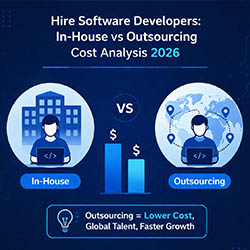
Outsourcing teams bring cost savings but carry their own trade-offs. Lower regional rates don't always mean lower total project cost. We've tracked offshore developer projects where miscommunication added 3 extra revision cycles. Those cycles consumed the savings from the cheaper rate entirely. Skill level matters just as much as location when calculating real cost. A junior developer at $30 per hour takes three times longer on complex logic. We always evaluate rate against demonstrated experience, not just the number on the quote sheet.
US developers charge more for reasons that go beyond just location. The mature tech ecosystem here produces engineers with deep, specialized experience. A senior US developer working on fintech or healthcare software brings compliance knowledge built over years. That expertise alone saves weeks of costly back-and-forth during development. Rates for US developers run $120 to $200 per hour depending on specialization. We've worked with North American teams where one experienced engineer replaced three junior offshore developers. The output quality and speed justified every dollar of the difference.
Canada software engineers offer a compelling middle ground in North America. Their rates sit at $80 to $130 per hour, slightly below US market averages. Yet the senior expertise level and tech ecosystem maturity match closely with US standards. We've collaborated with Canadian teams on United States client projects multiple times. Communication stays smooth, time zones align well, and code quality stays consistently high. North American developers also understand local compliance requirements like HIPAA or SOC 2 natively. That built-in regulatory knowledge cuts legal review time and reduces costly rework later.
UK developers sit just below North American rates in the global market. Their hourly rates run $80 to $150 per hour depending on seniority and specialization. London-based teams especially charge closer to the upper end of that range. We've engaged UK developers on several United States client projects requiring strong technical expertise. Their structured engineering approach and clear documentation habits stood out every time. Delivery timelines stayed predictable and code reviews needed fewer revision rounds than expected. That consistency makes the rate feel fair against the actual output delivered.
Germany software engineers bring a different kind of value to the table. German teams are known for precision, structured workflows, and rock-solid backend development. Rates range from $70 to $130 per hour across mid to senior levels. We've noticed Germany software engineers excel particularly in enterprise-grade systems requiring strict data standards. Their attention to code quality reduces post-launch bug rates noticeably compared to cheaper alternatives. Western Europe as a whole offers balanced cost without sacrificing the engineering depth complex projects demand. For United States businesses wanting quality control without full North American pricing, this region deserves serious consideration.
Poland developers have become a top choice for United States tech companies. Their rates run $45 to $80 per hour with strong computer science foundations. Polish engineers perform especially well in full-stack development and complex algorithmic work. We've managed projects with Poland developers who matched North American output at nearly half the cost. English communication stays sharp and project handoffs happen without the usual offshore friction. That combination of moderate pricing and high skill makes Poland a repeat choice across our client base.
Ukraine developers built a strong global reputation before recent geopolitical disruptions. Many experienced Ukrainian engineers now work remotely across Europe and beyond. Rates average $35 to $70 per hour depending on seniority and tech stack. We've worked with Ukraine developers who delivered clean, well-documented code on aggressive timelines. Eastern Europe as a region produces graduates from strong engineering universities every year. That steady talent pipeline keeps skill levels high while outsourcing costs stay competitive. For United States businesses watching budgets closely, this region consistently delivers real value per dollar spent.
India developers offer some of the widest rate ranges globally. Junior engineers start as low as $15 to $25 per hour while senior specialists charge $50 to $80 per hour. That gap reflects highly variable experience levels across the talent pool. We've hired from both ends of that range on different projects. Senior India developers with 8 or more years delivered clean architecture and fast turnarounds. Junior hires needed heavy supervision and produced costly rework cycles. Screening carefully before hiring saves more money than the low rate itself.
Philippines developers average $20 to $45 per hour with notably strong communication skills. Their cultural alignment with United States work styles reduces friction during daily standups. Vietnam developers charge $25 to $50 per hour and excel in frontend development and mobile builds. We've seen Vietnam developers produce sharp UI work that impressed even picky US-based design leads. Asia as a region suits projects with clear specs and low ambiguity. Loose requirements handed to junior Asian development teams almost always create timeline problems. We always recommend pairing offshore Asian teams with a senior technical lead onshore.
Freelance developers charge $25 to $150 per hour based on skill and platform. That rate looks attractive on a tight budget, especially for small tasks. The problem shows up fast on multi-feature builds needing coordinated effort. One freelancer handles one thing at a time with no backup when life happens. We've watched United States clients lose 3 to 6 weeks when a solo freelancer went dark mid-project. There's no project management support built into that relationship by default. Every decision, delay, and direction change lands directly on the client.
Software agencies cost more upfront but bring built-in scalability and structure. Rates run $75 to $200 per hour depending on region and specialization. That price includes a project manager, QA tester, designer, and multiple developers working together. Dedicated teams from agencies scale up or down based on project phase without recruiting delays. We've seen agency-managed builds finish faster than freelance projects at lower total hours. The reliability gap between the two options widens significantly on complex or long-term builds. For anything beyond a simple prototype, structured teams consistently outperform individual contractors on total delivery value.
Software type shapes the budget before a single developer gets hired. Web applications with standard features cost $30,000 to $80,000 depending on complexity. Add user authentication, dashboards, and reporting and that number climbs fast. Mobile apps built for a single platform start around $40,000 to $100,000 for a polished build. Cross-platform mobile development pushes that range higher due to additional system integrations. We've scoped dozens of builds across software types and the pattern stays consistent. More integrations always mean more testing hours, more edge cases, and more budget.
SaaS platforms carry higher base costs due to multi-tenant architecture requirements. Building subscription billing, user roles, and usage tracking adds significant system complexity. Typical SaaS platforms in the United States market cost $75,000 to $200,000 to launch properly. Enterprise software sits at the top of the range for good reason. These systems connect HR, finance, operations, and compliance tools under one roof. We've tracked enterprise software builds crossing $300,000 to $600,000 with 10 or more integrated modules. Each software type carries its own cost DNA and knowing that upfront prevents serious budget surprises later.
Simple web platforms with static pages and basic forms cost $10,000 to $30,000 to build. That range covers clean design, mobile responsiveness, and standard contact features. The cost gap opens wide once dynamic functionality enters the picture. Custom dashboards with real-time data, filters, and role-based access push budgets to $50,000 to $120,000. We've scoped web builds where the dashboard alone consumed 40 percent of total development hours. Every new data visualization or export feature adds designer and developer time simultaneously. Clients often underestimate how much a well-built dashboard actually costs to engineer properly.
SaaS portals sit at the complex end of web application pricing entirely. They require user onboarding flows, subscription management, and multi-tenant data separation. A fully functional SaaS portal in the United States market costs $80,000 to $200,000 at minimum. We've seen web platform builds with heavy third-party tool connections cross that upper limit before launch. API-heavy architectures add testing layers that simple websites never need. Each external connection requires error handling, timeout logic, and security validation. We always map the full data flow before estimating web application costs on complex builds.
Building separate iOS apps and Android apps natively costs significantly more. Each platform needs its own codebase, testing cycle, and deployment process. A native iOS app in the United States market costs $40,000 to $100,000 to build properly. A matching Android app built separately adds another $35,000 to $90,000 on top. We've seen clients commit to both native builds and watch their total budget double unexpectedly. Native development delivers the best performance and deepest platform-specific features. That quality comes at a real price that surprises first-time app buyers consistently.
Cross-platform apps built with React Native or Flutter cut that double spend significantly. One shared codebase deploys to both iOS and Android simultaneously. Development costs for cross-platform apps typically run $40,000 to $90,000 total for both platforms. We've delivered cross-platform builds that felt native to end users without the native price tag. The trade-off shows up when apps need deep hardware access like camera APIs or biometric features. Those platform-specific integrations still require separate native modules and add cost back in. We always help clients weigh feature needs against budget before choosing between native and cross-platform development.
Most clients budget for coding but forget the other product development stages entirely. The software development lifecycle splits cost across several distinct phases. Discovery and planning takes up roughly 10 to 15 percent of the total project budget. UI/UX design consumes another 15 to 20 percent depending on screen count and complexity. Core development phase carries the heaviest weight at 40 to 50 percent of total spend. We've tracked these phase distributions across dozens of United States builds and the pattern holds remarkably consistent. Skipping or underfunding early phases always inflates the development phase cost later.
Quality assurance testing claims 15 to 20 percent of a well-managed project budget. Many clients try to cut this phase first and regret it at launch. We've seen untested builds ship with critical bugs that cost more to fix than the testing phase would have. Deployment and launch adds another 5 to 10 percent for server setup, environment configuration, and go-live support. Post-launch maintenance planning should reserve 15 to 20 percent of the original build cost annually. We always present clients with a full phase-by-phase cost distribution before approving any project budget. Seeing every percentage upfront removes the shock of mid-project spending conversations.
Product discovery is the phase most clients want to skip to save money. That decision almost always backfires before the second sprint ends. Requirement analysis catches conflicts between what stakeholders want and what developers can build. Finding those conflicts in planning costs a fraction of fixing them mid-development. This phase typically runs $3,000 to $15,000 depending on project size and team involvement. We've run discovery workshops for United States clients where three days of structured planning eliminated six weeks of potential rework. That math makes the investment obvious every single time.
Solid project planning produces detailed user stories, technical specs, and a realistic timeline. Each of those documents directly reduces guesswork during the actual build phase. We've measured the impact across multiple projects and the finding stays consistent. Teams with complete requirement documentation ship features 20 to 30 percent faster than those without. Vague briefs force developers to make assumptions and assumptions generate bugs. A thorough scope definition document also protects clients when agencies try to bill for out-of-scope additions. We treat discovery not as an optional service but as financial protection for every dollar spent after it.
Where the Biggest Slice of Your Budget Actually Goes
Coding consumes more of the project budget than any other single phase. Backend engineering alone accounts for 40 to 50 percent of total development hours on complex builds. It handles databases, server logic, APIs, and all the invisible work users never see. Frontend development adds another 20 to 30 percent on top of that backend foundation. Together these two layers form the financial core of every software project. We've reviewed budget breakdowns across United States client projects consistently over the years. The development phase almost always surprises clients with how many hours the hidden logic actually needs.
Backend engineering complexity grows with every new business rule added to the system. Payment processing, user permissions, and data encryption each add significant coding hours. We've tracked projects where backend work alone billed $40,000 to $90,000 before frontend touched a single screen. Frontend development then adds interface logic, responsive layouts, and state management on top. Both layers need independent code reviews, merge approvals, and regression testing after every sprint. We always show clients a projected hour split between backend and frontend before development starts. That transparency stops the sticker shock when the first monthly invoice arrives.
Most agencies calculate cost using one simple base formula. Total cost equals development hours multiplied by the hourly rate. A project needing 500 development hours at $100 per hour costs $50,000. That math looks straightforward until project scope changes mid-build. Software estimation models like story points or function point analysis add more precision to that base formula. We use three-point estimation on complex builds covering best case, worst case, and most likely hour counts. That method gives clients a realistic cost range instead of a single number that rarely holds.
Project scope feeds directly into every hour estimate produced. Each feature gets broken into tasks and each task gets an estimated hour count assigned. We've used bottom-up estimation on large United States projects where every module gets costed independently first. Those individual estimates roll up into a total project figure with a contingency buffer of 15 to 20 percent added. That buffer covers unexpected technical blockers, integration delays, and requirement adjustments. Agile sprint planning helps recalculate cost estimates after each two-week cycle with real data. We always recalibrate projections after the first two sprints when actual velocity becomes clear.
The product backlog holds every feature a client wants built. The problem is most backlogs mix simple features with highly complex ones. A simple feature list item like a profile page costs $1,500 to $4,000 to build. A complex feature like a real-time collaboration tool jumps to $15,000 to $35,000 easily. We score every item in the backlog by complexity rating before attaching hour estimates. Low complexity features get a base rate multiplier and high complexity ones get a separate deep-dive estimate. That separation stops cheap-looking features from hiding expensive ones inside a blended average.
Functionality scope determines the final feature count and directly sets the total project cost. We've reviewed United States client backlogs where 30 percent of listed features carried 70 percent of the total build cost. Identifying those high-cost features early lets clients make smarter trade-off decisions before development locks in. Trimming one complex feature can free budget for three simpler but more valuable ones. We always walk clients through a weighted feature analysis before finalizing any project quote. That process ranks every backlog item by cost, user value, and build dependency simultaneously. Clients who go through it almost never face budget surprises after development starts.
Hour-based pricing sounds simple but hides real variables underneath. The core formula multiplies developer hourly rate by estimated development hours for each role. A project needing 300 hours from a $120/hr engineer costs $36,000 for that role alone. Add a designer at 80 hours and a QA tester at 100 hours and the total climbs fast. We've seen United States clients shocked when they finally see hours broken down by role. Each team member carries a different hourly rate and contributes a different hour volume. That role-by-role breakdown tells a much clearer story than a single blended rate.
Estimated development hours shift based on how well requirements were documented upfront. Vague requirements force developers to estimate wide ranges with large buffers built in. We've tracked projects where poor documentation inflated hour estimates by 30 to 40 percent above actual need. Clear specs let teams estimate tightly and price more accurately from day one. We always request a detailed requirements document before producing any hour-based quote for clients. That document locks assumptions and prevents the rate-times-hours formula from drifting during the build. Accurate inputs into the formula produce trustworthy outputs every single time.
Custom software development cost in 2026 depends on far more than just developer rates. Project size, feature complexity, team location, and technology stack all move the final number. We've walked through every major cost driver in this guide for good reason. Knowing each variable helps you ask better questions before signing any contract. A well-planned software budget accounts for discovery, design, development, testing, and post-launch support. Missing any phase creates gaps that cost far more to fix than to plan for upfront.
Smart businesses treat software investment as a structured decision, not a guessing game. Every section in this guide reflects real patterns we've observed across United States client projects. Feature-based estimation, regional rate comparisons, and lifecycle cost breakdowns all serve one purpose. They give you the clarity to budget confidently and build without surprises. We've seen projects succeed on tight budgets simply because planning came before spending. Start with a clear scope, match your team to your goals, and your software development cost stays predictable from first sprint to final launch.