F-1 , heaven mall, zarar Shaheed road lahore
DevSol Hub That Ensures Your IT Runs Seamlessly, Anytime and Every Time

At Devsol Hub, we bring together creativity and technology to build websites and designs that help brands shine online with confidence.

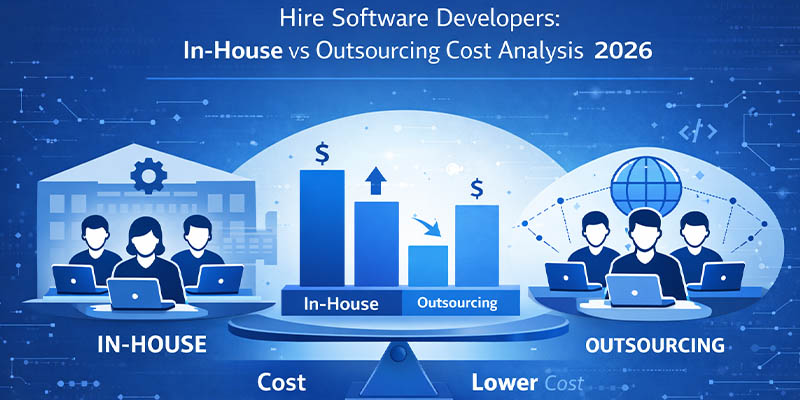
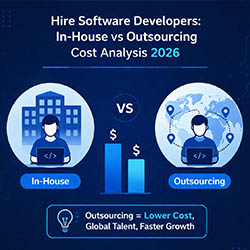
Most US businesses bleed money on the wrong hiring model. A full-time software developer costs $95K–$130K yearly. That includes salary, benefits, and onboarding fees. But the real loss is idle time between sprints. We've watched teams pay full salaries during 6–8 week gaps with zero active output. That's not a hiring cost. That's a budget leak. A software outsourcing company charges only for delivered work. In 2026, AI-assisted coding has shifted this gap even wider. Outsourced teams now ship faster at a lower cost analysis per feature.
The real metric is cost-per-output, not hourly rate. Staff augmentation gives you skilled software developers without long-term overhead. We've helped US product teams cut deployment costs by 40% using this model. In-house development makes sense for long-term core products. But for fast cycles, software outsourcing wins on speed and budget. US tech hiring now takes 45 days on average. That delay alone can kill a launch window. Pick the model that delivers more output per dollar spent.
Most US companies look at salary and stop there. That's the mistake. The real developer cost goes far beyond a monthly paycheck. Recruitment alone runs $28K–$35K per hire in the US market right now. Then add 3–6 months of onboarding before they ship anything useful. We've reviewed budgets where training, software licenses, and HR overhead pushed the hiring cost past $180K in year one. Nobody puts that number in the job posting. The total cost of ownership (TCO) covers every dollar spent from job post to first productive commit.
Staff augmentation and software outsourcing skip most of that TCO entirely. You get a working developer on day three, not month four. We've tracked projects where businesses saved $60K–$80K just by cutting the onboarding phase. A software outsourcing company absorbs recruitment, training, and tool costs on their end. You only pay for output. When businesses hire software developers through augmentation, they also avoid severance costs if the project ends. That's a real number most finance teams forget to calculate upfront.
Most teams only see salary on paper. But that number sits on top of a much bigger stack. Benefits alone add 20%–30% on top of base pay in the US. Then comes infrastructure, which covers servers, cloud tools, and dev environments. We've audited tech budgets where tooling costs ran $8K–$15K per developer yearly. Project management overhead adds another layer too. Someone has to run standups, handle blockers, and review code. That person costs money even if they write zero lines of code.
The hidden layer hurts more than the visible one. Productivity loss during ramp-up quietly drains output for months. We've seen new hires reach full speed only after week 14 on average. A software outsourcing company skips this entire ramp-up phase. Remote software developers come with their own tools, infrastructure, and workflows already set. Staff augmentation cuts the management load too since augmented teams self-organize faster. That full cost stack, visible plus hidden plus productivity loss, is what separates smart hiring decisions from expensive ones.
A low hourly rate feels like a win at first glance. But that number only tells part of the story. We've reviewed contracts where a $25/hr developer delivered half the output of a $55/hr one. The total cost per feature was actually higher with the cheaper hire. Slow delivery, rework cycles, and miscommunication eat into every dollar saved on rate. Most US businesses learn this the hard way after the first project runs 60% over deadline. Rate shopping without measuring output is just expensive guesswork.
The smarter measure is output cost, meaning what you pay per working feature shipped. We've calculated this across dozens of projects and the pattern stays consistent. Offshore software developers with strong process frameworks beat cheap freelancers on output cost every time. A reliable software outsourcing company delivers predictable velocity, so your budget doesn't bleed between milestones. Staff augmentation adds another layer of control since you track output directly within your own workflow. Pay for results, not just hours logged on a timesheet.
Developer rates vary wildly depending on where you hire. In the US, a mid-level developer runs $95–$130 per hour fully loaded. EU markets like Germany and the Netherlands sit around $65–$90 per hour. Then the gap gets interesting. Poland delivers strong senior-level talent at $35–$55 per hour. Brazil hits a sweet spot too, averaging $30–$45 per hour with solid timezone overlap for US teams. We've helped clients map these numbers against actual delivery speed before making any hiring decision.
Geo arbitrage works when you pair the right region with the right role. India remains the highest-volume talent market globally, with rates from $20–$40 per hour for experienced developers. We've seen staff augmentation models pull talent from India and Poland simultaneously to balance cost and timezone coverage. A smart software outsourcing company uses this regional mix intentionally, not randomly. When US businesses hire software developers through geo-diverse teams, output quality stays high while the budget stretches further. Location affects rate, but process and communication determine real value.
Most budgets track hours. Smart teams track feature cost instead. A two-week Agile cycle tells you exactly what shipped and what it cost. We've worked with US product teams that switched from hourly tracking to sprint cost analysis. The difference in budget clarity was immediate. One Scrum team delivered 14 features in 90 days at $4,200 per feature. Their previous in-house setup averaged $9,800 per feature for similar complexity. That gap reveals what hourly rate never shows you. Unit economics expose the real expense hiding inside every development cycle.
Outsourced Scrum teams run leaner sprint structures by default. They cut ceremony time and focus on shipped output per cycle. We've measured sprint cost across nearshore and offshore engagements consistently. Teams using structured Agile delivery averaged 22% lower feature cost than unstructured hourly contracts. When you hire software developers through a disciplined outsourcing model, each sprint becomes a measurable unit of spend. That makes forecasting straightforward and scope creep easier to catch early. Budget control starts at the sprint level, not the invoice level.
Building an in-house team gives you full control. But that control comes with a fixed price tag that never pauses. Employment cost in the US stacks fast across salary, payroll tax, health insurance, and paid leave. We've reviewed in-house budgets where these fixed costs ran $210K–$260K per developer annually at mid-senior level. That number stays the same whether your team ships 10 features or zero that month. Most founders don't see this clearly until the second or third quarter of operation. Fixed cost models reward consistency but punish slow periods hard.
The in-house team structure also carries costs that live outside the payroll line. Office space, hardware refreshes, software licenses, and HR administration all add up quietly. We've tracked engagements where non-salary employment cost added 35%–45% on top of base compensation. Scaling up means hiring, which takes 45 days minimum in the current US tech market. Scaling down means severance, legal review, and morale risk. A software outsourcing company sidesteps this entire fixed structure. Staff augmentation gives similar control without locking your budget into a rigid monthly commitment regardless of output.
In-house hiring front-loads your budget before a single line of code ships. Recruitment kicks things off with job boards, agency fees, and interview time. We've tracked US tech hiring where recruitment alone consumed 6–8 weeks of management bandwidth. Then comes onboarding, which runs another 4–6 weeks before real productivity begins. Most companies absorb this quietly without calculating the actual dollar cost. A mid-level developer salary in the US starts at $95K and climbs fast with experience. That clock starts ticking on day one, not on first commit day.
The front-loaded burden compounds when a hire doesn't work out. A bad fit means repeating recruitment and onboarding costs all over again. We've seen this cycle cost US startups $85K–$120K per failed hire when everything gets counted. Salary commitments don't pause during performance reviews or notice periods either. When businesses hire software developers through augmentation instead, they skip this front-loaded risk entirely. Augmented developers plug into existing workflows fast, often within 48–72 hours. That speed alone changes how confidently a team can plan its first delivery milestone.
Indirect costs never show up on the hiring budget. But they hit the P&L every single month. HR processing alone adds $3K–$6K per developer yearly in US companies. Admin overhead covers compliance tracking, contract management, and performance documentation. We've audited tech teams where office space per developer ran $8K–$14K annually in mid-tier US cities. That number jumps sharply in markets like San Francisco or New York. Most finance teams never isolate these figures per head. They get buried inside departmental budgets and never trigger a real conversation.
Software licenses quietly stack on top of everything else. A standard developer toolkit covering IDE, project tools, and cloud access runs $4K–$7K per seat yearly. We've reviewed setups where teams paid for unused software licenses across 30% of their developer seats. That's pure waste with no output attached. A reliable software outsourcing company absorbs all of this overhead internally. Their admin, HR, and tooling costs never touch your budget line. Staff augmentation works the same way, giving US businesses clean, predictable invoices without a hidden corporate overhead layer underneath.
Two developers on the same salary rarely deliver the same output. That gap is where budgets quietly break. A senior developer ships 3–4 times more usable code per week than a junior developer at 70% of the salary cost. We've measured this across mixed in-house teams on US product builds. The math creates a real problem fast. Both salaries run every month regardless of who ships what. Equal pay structures mask unequal output, and that inequality drives your real cost per feature up without any visible warning sign.
Most in-house teams carry this imbalance for months before noticing it in delivery timelines. A junior developer needs close supervision, which pulls senior developer time away from actual building. We've seen senior engineers spend 30–40% of their week on code reviews and mentoring alone. That mentoring cost never appears on any invoice. When businesses hire software developers through structured outsourcing, team composition gets matched to project complexity intentionally. Experienced staff augmentation partners assign seniority levels based on output targets, not org chart preferences. That alignment cuts productivity variance and brings cost per output back under control.
Regulatory compliance adds a cost layer most hiring budgets never include. HIPAA readiness alone requires security training, audit logging, and access controls across every developer workstation. SOC 2 certification costs US companies $30K–$100K in the first year to implement and maintain. We've worked with healthcare and fintech teams that spent 3–4 months just preparing their in-house environment for compliance audits. That preparation time pulls developers away from actual product work completely. GDPR adds another layer for any team handling EU user data, requiring documented data handling policies and breach response procedures.
Legal costs compound this further inside in-house structures. Employment contracts, IP assignment agreements, and NDAs all need legal review per hire. We've seen US startups spend $15K–$25K annually just on developer-related legal documentation. Security tooling for in-house teams runs separately on top of that. A certified software outsourcing company typically arrives HIPAA, SOC 2, or GDPR compliant by default. Their existing frameworks cover what takes in-house teams months to build. Businesses that hire software developers through compliant outsourcing partners skip this entire regulatory cost layer from day one.
Why Outsourcing Shifts Your Dev Cost From Fixed to Variable
In-house teams lock you into fixed monthly costs no matter what ships. Outsourcing flips that model completely. You pay for active work cycles, not idle headcount. We've guided US product teams through this shift and the budget relief shows up fast. Offshore teams in India or Eastern Europe engage on project-based contracts with defined deliverables. Nearshore teams in Latin America add timezone overlap for US businesses that need real-time collaboration. Both models let you scale developer count up or down based on actual workload, not annual headcount plans.
The variable cost structure changes how businesses plan product budgets entirely. A software outsourcing company invoices per milestone, per sprint, or per engagement scope. We've seen US companies cut idle developer cost by 50% simply by switching to this model during low-output quarters. Staff augmentation adds even more control since you dial team size to match sprint demand directly. Offshore contracts also remove severance risk when project phases end. Nearshore arrangements give similar flexibility with faster response times across US business hours. That combination of scalability and cost control is what makes outsourcing structurally different from any fixed employment model.
Picking the wrong pricing model costs more than picking the wrong developer. Fixed price works well when your scope is locked and documented before work starts. It puts delivery risk on the vendor, which sounds great until change requests hit. We've watched fixed price contracts balloon 40% over budget the moment clients added mid-project features. T&M flips that risk back to the client side. You pay for every hour logged, so open-ended scopes can quietly drain budgets without clear milestones guiding delivery checkpoints.
The dedicated team model sits between both and handles risk more evenly. You get a committed group of developers working exclusively on your product each month. We've seen this model work best for US businesses with evolving roadmaps that change quarterly. A structured software outsourcing company helps clients match the right model to project type before signing anything. Staff augmentation follows a similar logic to T&M but gives you direct control over task assignment and delivery pace. When scope clarity is low, dedicated team pricing protects budget far better than either extreme.
Not all contract models carry equal risk. Each pricing structure shifts financial exposure differently between client and vendor. Fixed price puts scope risk on the vendor but punishes change heavily. Time and Materials puts budget risk on the client but rewards flexibility during fast-moving builds. We've mapped this across dozens of US client engagements and the pattern holds consistently. Dedicated team contracts spread risk most evenly since both sides commit to a monthly structure with shared delivery accountability. Choosing the wrong contract model early locks you into a cost structure that fights your project type the entire way through.
Here is how the risk versus cost mapping breaks down practically. Fixed price suits short, well-scoped builds under 90 days. Time and Materials fits exploratory or MVP-stage products where scope shifts weekly. Dedicated team works best for 6–12 month product builds needing consistent velocity. We've guided US startups through all three contract models and the biggest mistakes always come from mismatching model to project phase. A good software outsourcing company reviews your roadmap before recommending any structure. Staff augmentation adds a fourth path where you control task assignment directly inside your own delivery pipeline without full vendor dependency.
Every region offers a different cost-quality tradeoff. India stays the highest-volume market with rates from $20–$40 per hour for experienced developers. Volume is strong but quality screening matters more here than anywhere else. Ukraine built a strong reputation for senior engineering talent before 2022 and that talent pool has since redistributed across Europe. We've worked with Ukraine-origin developers now based in Germany and Poland delivering the same quality at $45–$65 per hour. Poland holds its ground as the most consistent cost-quality zone in Eastern Europe right now. Rates sit at $35–$55 per hour with strong English communication and EU timezone alignment for US morning overlaps.
Mexico has become the fastest-growing nearshore market for US businesses in 2026. Rates run $35–$55 per hour with same-timezone availability across most US working hours. We've placed augmented teams from Mexico into US product builds where daily collaboration was non-negotiable. The timezone advantage alone removed async delays that offshore arrangements typically carry. Each region suits a different project profile. India fits high-volume, process-driven builds. Poland suits complex architecture work. Mexico works best when real-time collaboration drives delivery speed. Matching region to project type is where smart staff augmentation decisions actually begin.
Hourly rate alone never tells you where the real value sits. Talent density matters just as much as the number on the contract. Global markets vary widely on both dimensions and the gap between them is wider than most US buyers expect. Eastern Europe produces a high concentration of senior engineers per capita compared to most other regions. We've sourced developers across multiple global markets and the density of strong mid-to-senior talent in Poland and Romania consistently outperforms markets with lower average rates. A cheap region with thin senior talent forces you to hire more developers to hit the same output target.
Latin America sits in a strong position for US businesses prioritizing collaboration speed. Talent density in Colombia, Argentina, and Mexico has grown sharply since 2023. We've tracked hiring data across these markets and senior full-stack developers now command $38–$58 per hour with measurable output quality. Southeast Asia offers lower rates at $18–$32 per hour but senior density thins quickly above mid-level roles. When businesses hire software developers across global markets, matching talent density to role seniority requirement saves more budget than chasing the lowest rate. A skilled software outsourcing company maps density data before recommending any regional hiring strategy.
Outsourcing saves money on paper but leaks efficiency in places most budgets never track. Communication gaps cause the most damage and they rarely show up on any invoice. We've measured projects where unclear requirements triggered 3–5 rework cycles per feature build. Each rework cycle consumed 8–12 hours of billable developer time that produced zero new output. That's pure efficiency leakage hiding inside an otherwise clean contract. Time zone gaps compound this further when async delays push a one-day fix into a three-day back-and-forth thread. A 12-hour time zone gap between a US client and an offshore team can quietly erase 15–20% of weekly productive capacity.
Vendor onboarding friction adds another hidden layer most clients miss entirely. Even experienced outsourced developers need 1–2 weeks to understand your codebase, tools, and workflow preferences. We've tracked this ramp cost across multiple engagements and it averages $3K–$6K in lost velocity per new team member. Poor communication protocols during this window stretch that cost further. A structured software outsourcing company reduces this with documented handoff processes and dedicated account management from day one. Staff augmentation cuts the time zone friction risk by letting US businesses prioritize nearshore talent with overlapping working hours and faster daily feedback loops.
Vendor dependency builds slowly but exits fast when you try to leave. Migration costs to switch outsourcing partners typically run 20–50% of the original project budget depending on codebase complexity and documentation quality. We've seen US companies stuck with underperforming vendors simply because the cost to rebuild outweighed the pain of staying. That's vendor lock-in dressed in financial pragmatism. The risk compounds when vendors use proprietary tools, custom project management layers, or undocumented code patterns that don't transfer cleanly to new teams. What looks like efficiency in year one becomes a hostage situation by year three.
Exit cost modeling should be part of any outsourcing agreement before signing. We recommend clients ask two questions during vendor selection: how quickly can we transition to another partner, and what does that process cost. A transparent software outsourcing company documents code, maintains clean architecture, and uses standard toolchains that travel easily. Staff augmentation reduces lock-in risk further because augmented developers work inside your existing infrastructure using your tools. When businesses hire software developers through structures designed for portability, they preserve negotiating power and avoid the sunk-cost trap that keeps them tied to underperforming partners.
Most outsourcing budgets plan for rate cards but ignore macro-economic shifts entirely. Exchange rate movement alone can swing your effective contract cost by 8–15% within a single project cycle. We've watched US clients lock fixed-price contracts in USD only to see vendor margins erode when local currency shifted sharply. That pressure pushed vendors to quietly cut team quality mid-project to protect their side of the deal. Inflation in high-demand engineering markets like Poland and India has pushed developer rate expectations up 12–18% since 2023. A contract signed 18 months ago almost certainly needs renegotiation today to retain the same talent tier.
Geopolitical risk adds a layer that no spreadsheet model naturally captures. We've seen delivery timelines collapse when regional instability disrupted internet infrastructure and banking access for vendor teams. Businesses that concentrated their entire development dependency in one region felt this most sharply. Spreading staff augmentation across two or three regions buffers this exposure meaningfully. A seasoned software outsourcing company builds contingency staffing plans that account for geopolitical risk before project kick-off. Smart US businesses now treat regional diversification as a core part of their outsourcing cost strategy, not an afterthought added after something goes wrong.
Single-layer cost comparison misleads most US businesses making this decision. Looking only at salary versus contract rate skips five other cost layers that determine the real outcome. We've built multi-layer cost comparison frameworks across dozens of client engagements and the pattern stays consistent. In-house hiring models carry front-loaded fixed costs that run regardless of output volume. Outsourced hiring models convert that fixed burden into variable spend tied directly to delivery milestones. A US company running a 5-person in-house team spends roughly $780K–$950K annually when every cost layer gets counted properly.
The same output through a structured outsourcing model runs $280K–$420K depending on region and seniority mix. We've validated these ranges across real project budgets, not estimates pulled from rate card comparisons alone. That gap widens further when you factor in recruitment cycles, compliance overhead, and productivity ramp time. Staff augmentation sits closest to outsourcing on total cost but adds direct workflow control that pure project outsourcing removes. When businesses hire software developers through the right model for their stage, the savings show up within the first two quarters. The model choice matters more than the individual rate negotiation ever will.
In-house hiring demands heavy CAPEX before a single feature ships. Hardware procurement, workstation setup, and software licensing all require upfront spend before day one. Onboarding adds another 4–6 weeks of paid time before real productivity begins. We've reviewed first-quarter budgets where US startups spent $45K–$70K on setup costs before writing one line of production code. That capital sits locked in people and equipment regardless of whether the product moves forward. Early-stage businesses feel this liquidity pressure most sharply because cash needs to move fast during initial build phases.
Outsourcing flips this CAPEX burden into immediate operational spend tied to output. No hardware costs. No workstation setup. Zero onboarding infrastructure on your side. We've seen US product teams launch their first sprint within 72 hours of signing an outsourcing agreement. That speed preserves working capital for product decisions rather than people infrastructure. Staff augmentation mirrors this liquidity advantage since augmented developers arrive with their own tools and workflows ready. A structured software outsourcing company absorbs every setup cost internally and passes none of it to the client during project initiation. Upfront cost efficiency alone makes outsourcing the stronger opening move for most US businesses in 2026.
Long-term cost depends entirely on project duration and team scale. TCO shifts in favor of in-house only after a product reaches stable, multi-year development with a large consistent team. We've modeled this crossover point across multiple US product companies and it typically appears around the 3-year mark with teams of 8 or more developers. Before that threshold, outsourcing consistently delivers lower TCO across every cost layer we've measured. Short-cycle projects under 18 months almost never justify the fixed infrastructure cost of building in-house from scratch.
Scale changes the math significantly past that crossover point. A 10-person in-house team running for 4 years builds institutional knowledge that reduces bug rates and speeds future feature development organically. We've tracked this knowledge compounding effect and it does produce measurable TCO reduction after year three. Below that duration, the overhead always outweighs the knowledge benefit. Staff augmentation extends the outsourcing advantage further by letting US businesses scale developer count without crossing into full employment overhead. When businesses hire software developers through flexible engagement models, they delay the in-house crossover point and preserve budget efficiency through earlier growth stages.
Input cost is the wrong place to focus this comparison. Feature cost tells you far more about which model actually performs better. We've tracked feature cost across in-house and outsourced teams running similar product complexity in the US market. In-house teams averaged $7,400–$11,200 per feature when all input costs were divided by shipped output. Outsourced teams with structured delivery processes averaged $3,800–$5,600 per feature across the same complexity range. That gap exists because outsourced teams optimize around output targets rather than time logged. Idle hours don't bill, so velocity stays consistently higher throughout each sprint cycle.
Output efficiency separates strong outsourcing models from average ones. We've seen US product teams cut feature cost by 38% simply by switching from hourly contracts to milestone-based outsourcing agreements. The accountability shift drives faster decisions and cleaner scopes per cycle. In-house teams struggle here because internal politics and meeting culture quietly consume productive hours without showing up in any cost report. A focused software outsourcing company removes that internal drag entirely. Staff augmentation improves in-house output efficiency by injecting experienced developers who already know how to ship without organizational friction slowing them down.
Most cost comparisons show only the tip of the iceberg. Salary, contract rate, and headcount sit visible above the waterline. Everything dangerous hides below it. Hidden cost layers like decision delay, context switching, and meeting bloat never appear on any vendor invoice or payroll report. We've audited development budgets where inefficiency consumed 28–35% of total spend without a single line item showing it. A developer interrupted three times per day loses up to 2.5 hours of deep work. Multiply that across a 6-person team for 12 months and the hidden cost reaches six figures without anyone noticing it building up.
The iceberg grows wider as team size increases. Inefficiency compounds through poor handoff documentation, unclear sprint goals, and misaligned stakeholder expectations. We've traced budget overruns back to these invisible layers in more projects than we can count. None of them showed up in the original cost estimate. Staff augmentation reduces several iceberg layers by bringing process-disciplined developers who document and hand off cleanly by default. A reliable software outsourcing company runs structured delivery workflows that actively cut decision delay and meeting bloat from every cycle. When US businesses hire software developers without auditing these hidden layers first, they budget for the tip and pay for the whole iceberg.
Every day a developer seat stays empty costs real money. The hiring funnel in US tech currently runs 45–60 days from job post to accepted offer. During that window your product roadmap stalls completely. We've calculated opportunity cost on delayed hires across multiple US product builds and the numbers surprise most founders. A 50-day vacancy on a $120K developer role costs roughly $16,500 in lost productive output alone. That figure ignores the management time spent screening resumes, running interviews, and negotiating offers. The hiring funnel consumes senior engineer attention that should be going directly into product development.
Opportunity cost compounds when a delayed hire pushes a launch date backward. Missing a market window by 6–8 weeks can cost far more than any salary figure on the budget sheet. We've seen US startups lose first-mover advantage directly because their hiring funnel moved slower than their competitors' outsourcing timelines. Staff augmentation removes this vacancy risk entirely since developers engage within 48–72 hours of scope agreement. A structured software outsourcing company maintains a pre-vetted bench of available talent specifically to eliminate funnel delay. Speed to productivity beats speed to hire every single time when product timelines are tight.
A new hire starts billing from day one but rarely delivers full output before week eight. Ramp-up time creates a paid productivity gap that most budgets treat as normal. We've measured this gap precisely across US product teams and the numbers are consistent. Developers operate at roughly 30–40% capacity during their first 30 days. Output climbs to 60–70% between days 31 and 60. Full productive capacity rarely arrives before day 75 at the earliest. That window costs a US company $12K–$22K in paid salary for below-threshold output depending on seniority level and role complexity.
The ramp-up time loss compounds when the new developer works on an unfamiliar tech stack. Learning codebase architecture, testing environments, and deployment workflows all consume hours that produce zero shippable output. We've tracked projects where senior developers spent their entire first sprint just reading documentation and attending orientation meetings. That sprint cost the client full billing with nothing to show at review. Staff augmentation dramatically compresses this window since augmented developers come pre-trained on common stacks and delivery workflows. When businesses hire software developers through a structured outsourcing model, ramp-up time shrinks to 3–5 days instead of 30–60 because integration processes are already built and tested.
Poor code quality creates a second invoice that nobody planned for. Bugs caught in production cost 4–5 times more to fix than bugs caught during testing. We've reviewed post-launch budgets where unplanned bugs consumed 22–30% of the original development spend in the first 90 days alone. Each critical defect pulls developers away from new feature work completely. Downtime adds a sharper financial edge on top of that. A single hour of production downtime costs US SaaS companies an average of $14,000–$23,000 depending on user volume and revenue model. That figure never appears on any development contract but hits the business just as hard as any invoice.
Rework cycles drain developer hours without producing anything new or billable. We've tracked projects where rework consumed 18–25% of total sprint capacity across a 6-month build. A clear SLA framework prevents much of this by holding delivery teams accountable to defined quality thresholds before code reaches production. Software outsourcing company partners with embedded QA processes reduce bug escape rates measurably compared to teams without structured testing workflows. Staff augmentation improves this further when augmented developers bring test-driven development habits into your existing codebase. Quality cost is a real budget line and teams that ignore it pay it anyway, just later and with more pain.
Cutting spend without measuring output is just guessing with a budget. Productivity determines what your money actually buys, not the rate card sitting in your contract. Two teams at identical monthly cost can produce wildly different output volumes depending on workflow structure and skill alignment. We've compared productivity data across in-house and outsourced teams on similar US product builds consistently. The highest-output teams shared one trait across every engagement. They measured value delivered per cycle, not hours logged per week. That single shift in measurement changed how every budget decision got made afterward.
Efficiency at the team level determines whether your development spend compounds or drains. A high-efficiency team ships faster, documents better, and creates less technical debt per feature. We've tracked teams where strong workflow efficiency reduced total project cost by 31% compared to equally sized teams with poor internal processes. Output value, meaning working features that generate revenue or user growth, is the real return on any development investment. When businesses hire software developers through models optimized for output rather than seat count, the budget math changes completely. A focused software outsourcing company builds delivery structures around efficiency targets, not billable hour maximization.
Rate shopping creates a false sense of budget control. A $22/hr developer who delivers half the output of a $48/hr developer costs more per working feature shipped. We call this the productivity multiplier and it changes how every rate comparison should be read. We've applied this multiplier across real project data from US clients comparing low-rate freelancers against structured outsourcing teams. The low-rate option won on paper every single time. The structured team won on actual cost per delivered feature every single time. Those two outcomes never matched and the gap between them averaged 34% in favor of the higher-rate structured team.
The productivity multiplier works in both directions depending on team quality. A $55/hr developer with strong architecture skills can carry two junior developers worth of output alone. We've observed this dynamic repeatedly on lean US startup builds where senior talent compressed timelines by 40% compared to larger junior-heavy teams. Staff augmentation lets businesses target this multiplier intentionally by selecting seniority levels matched to output requirements. A skilled software outsourcing company pre-screens for productivity benchmarks before placing any developer on a client project. When businesses hire software developers purely on rate without measuring output multipliers, they optimize the wrong number entirely.
Team composition drives ROI more than headcount ever will. Seniority mix determines how fast decisions get made, how clean the architecture stays, and how much rework the team generates per sprint. A junior-heavy team needs constant direction and produces more technical debt per feature shipped. We've analyzed composition data across US product builds and the pattern holds tight. Teams running a 60% senior to 40% junior ratio consistently outperformed inverse compositions on output per dollar spent. The senior layer absorbs complexity faster and keeps junior output moving in the right direction without derailing sprint goals.
Flipping that ratio to save on blended rate rarely works the way finance teams expect. We've watched junior-heavy teams spend 35–40% of sprint time in review loops that senior-led teams resolve in a single session. That review drag quietly inflates cost per feature without touching the hourly rate line. Seniority alignment to project phase matters just as much as the overall ratio. Early architecture stages need heavy senior involvement. Execution phases can absorb more junior contribution safely. A structured software outsourcing company calibrates seniority distribution per project phase automatically. Staff augmentation gives US businesses direct control over that ratio without rebuilding their entire team composition from scratch.
Not all cost drivers carry equal weight. Some inflate budgets by 10%. Others double them without a single warning sign. Scope definition sits at the top of the cost driver hierarchy every time. Poorly defined scope creates change requests, which trigger rework cycles, which extend timelines, which multiply every other cost below it. We've ranked cost drivers across dozens of US project budgets and scope instability consistently caused more budget damage than any rate or team size decision. Technology stack complexity sits second on that hierarchy. Choosing an unfamiliar stack forces longer ramp-up periods and narrows your available talent pool simultaneously.
Team structure ranks third among major cost drivers and most businesses underestimate its impact until mid-project. Mismatched seniority levels, unclear ownership, and poor handoff documentation quietly multiply delivery time and defect rates together. We've seen US product teams burn 40% of their budget on coordination failures that had nothing to do with developer skill level. Engagement model ranks fourth but influences all layers above it. Staff augmentation reduces coordination cost by embedding developers directly into your existing workflow. A disciplined software outsourcing company addresses all four cost driver layers before a project starts rather than discovering them one painful sprint at a time.
AI tools have permanently shifted what one developer can deliver per day. GitHub Copilot now handles boilerplate code, unit test generation, and basic function completion automatically. We've measured output velocity on teams using GitHub Copilot against teams without it on comparable US product builds. The AI-assisted teams shipped 28–35% more features per sprint at identical headcount and billing rates. That productivity gain directly reduces cost per feature without touching the contract rate at all. The disruption is already priced into how competitive outsourcing teams build and quote their services in 2026.
GPT-based code assistants push this further by accelerating documentation, API integration drafts, and debugging cycles. We've tracked debugging time on teams using GPT tooling and the reduction averages 40% per bug cycle compared to manual investigation alone. That time saving compounds across every sprint in a long-running project. Outsourced teams adopting these tools earlier than in-house teams gain a measurable cost advantage that clients often don't realize exists until they see the delivery comparison. Staff augmentation partners who embed AI-fluent developers into US product teams transfer this productivity gain directly into your existing workflow. A forward-thinking software outsourcing company builds AI tool usage into standard delivery process rather than treating it as an optional upgrade.
AI tools have changed the value equation for every development dollar spent. The real question in 2026 is no longer how many developers you need. It's which tools your developers use daily. AI tools like code assistants and automated testing platforms reduce manual effort per feature by 25–40% depending on project type. We've compared tooling ROI directly against labor cost increases across US client projects this year. A $3,000 annual investment in the right AI tools stack consistently outperformed adding one junior developer at $65K yearly salary. That math makes tooling selection a genuine budget decision, not just a developer preference.
DevOps tools deliver a different but equally strong ROI layer. Automated CI/CD pipelines cut deployment time from days to hours and reduce human error rates in production releases. We've tracked deployment frequency on teams using mature DevOps tools versus manual release processes across similar project scopes. Automated teams deployed 4–6 times more frequently with 60% fewer production incidents per quarter. That incident reduction alone saves significant unplanned remediation cost each cycle. Staff augmentation partners who arrive fluent in both AI tools and DevOps tools deliver compounding ROI from day one. When businesses hire software developers with strong tooling fluency, they buy productivity multipliers, not just headcount additions.
In-house hiring makes strategic sense in specific situations that most cost comparisons ignore entirely. IP ownership sits at the top of that list. When your core product relies on proprietary algorithms, trade secrets, or sensitive data architecture, keeping development internal reduces exposure risk meaningfully. We've advised US companies where IP ownership concentration in an outsourced team created contractual vulnerabilities that outweighed every cost saving on the table. Control over daily development decisions ranks equally high in this conversation. Products requiring rapid pivots based on real-time user feedback benefit from teams that sit inside your communication loop without handoff delays between sessions.
The tradeoff becomes clear when you map control requirements against budget reality. In-house gives maximum control but locks significant capital into fixed overhead regardless of delivery output. We've seen this tradeoff play out most sharply in regulated US industries like healthcare and fintech where compliance control justifies the premium. Companies past product-market fit with stable 3-year roadmaps also absorb in-house costs more efficiently than early-stage teams. Staff augmentation bridges this gap for businesses that need control without full employment overhead. Augmented developers operate inside your workflow under your direct management while the software outsourcing company handles all employment infrastructure behind the scenes.
Speed is the clearest signal that outsourcing is the right move. When your launch window is measured in weeks rather than quarters, building an in-house team simply cannot match the pace. Outsourcing removes the 45–60 day hiring cycle and replaces it with a productive team inside 72 hours. We've guided US startups through product launches where outsourcing compressed a 6-month build timeline into 11 weeks by eliminating every internal setup delay. That speed advantage directly affects market positioning, investor confidence, and early revenue generation. Missing a launch window costs far more than any rate difference between hiring models.
Scalability triggers the second clearest signal. When your product roadmap demands 3 developers this quarter and 12 next quarter, in-house hiring cannot flex that fast without serious structural pain. Scalability through outsourced or augmented teams lets US businesses match developer capacity to actual workload without carrying excess headcount between growth phases. We've seen companies scale from 4 to 16 developers in 30 days through structured outsourcing engagements without a single new employment contract. Staff augmentation adds the same scalability benefit with direct workflow integration. When businesses need to hire software developers fast and scale without friction, outsourcing consistently delivers what in-house timelines structurally cannot.
Neither pure model wins across every situation and most experienced US product teams already know this. The hybrid team structure solves what both extremes cannot handle alone. Core product decisions, architecture ownership, and sensitive IP stay with a small in-house group. Feature development, QA, and scaling work routes to outsourced or augmented developers on flexible contracts. We've structured hybrid team arrangements for US companies where this split reduced total development spend by 35–45% compared to fully in-house operations. The in-house layer stays lean and strategic while the external layer absorbs workload spikes without creating permanent overhead.
Flexibility is where the hybrid team model genuinely outperforms every alternative. Sprint demand varies by quarter and a fixed in-house team can't flex without painful hiring or layoff cycles. Outsourced capacity scales up and down around the stable core without disrupting product continuity or institutional knowledge. We've watched this model let US businesses run lean during slower quarters and push hard during product launch phases without budget shock in either direction. Staff augmentation fits naturally into the external layer of this structure since augmented developers integrate directly into the in-house team's workflow and communication tools. A skilled software outsourcing company manages that external layer so the in-house team focuses purely on strategy and core product decisions.
Abstract cost comparisons only tell half the story. Real scenarios show where budgets actually land. Take a US startup building an MVP with a 4-month deadline and $180K available. An in-house team of 3 developers burns that budget in salaries alone before launch day arrives. The same startup routing that budget through a nearshore outsourcing engagement gets a 5-developer team, QA coverage, and project management included within the same figure. We've structured similar scenarios for early-stage US companies and the outsourced path consistently delivered working products where the in-house path delivered half-finished codebases and empty budgets.
The enterprise scenario plays out differently but reveals the same pattern at scale. A mid-size US enterprise expanding a product line needs 8 additional developers for a 9-month build cycle. Hiring in-house adds $1.2M–$1.6M in fully loaded annual cost before the first feature ships. A structured software outsourcing company engagement covers the same 9-month scope for $420K–$580K depending on region and seniority mix. We've modeled this scenario across multiple enterprise clients and the savings consistently fund additional product investment in the same fiscal year. Staff augmentation gives enterprise teams a middle path by embedding external developers inside existing workflows without restructuring the entire delivery organization.
Every week a product sits unbuilt carries a real dollar figure most budgets never calculate. Cost of delay measures what a business loses per week of delayed delivery, not just what it spends on developers. We've applied cost of delay calculations to US product builds across both hiring models and the results change how clients think about rate negotiations entirely. A SaaS product generating $40K monthly revenue delayed by 6 weeks loses $60K in potential income before launch. That lost revenue dwarfs any rate savings achieved by choosing a slower in-house hiring path over a faster outsourced engagement. Time quantified as money reframes every model comparison instantly.
In-house hiring carries the highest cost of delay exposure because the timeline to first productive output stretches longest. Recruiting, onboarding, and ramp-up stack sequentially before a single feature ships. Outsourced teams cut that stack down to days instead of months. We've calculated that a 45-day hiring delay on a $120K developer role carries roughly $22K in cost of delay when lost output velocity gets factored alongside salary spend. Staff augmentation eliminates this delay window almost entirely. When businesses hire software developers through models optimized for speed, they recover cost of delay savings that never appear on any rate card comparison but show up clearly on the revenue timeline.
ROI from development spend depends on how quickly features reach paying users. In-house teams generate ROI slowly because the investment front-loads heavily before any revenue-generating feature ships. We've tracked ROI per release across both models on comparable US product builds and the gap appears within the first quarter. Outsourced teams with structured delivery workflows shipped first revenue-generating features 6–9 weeks earlier than equivalent in-house teams on the same budget. That earlier shipping date compresses time-to-market and moves the break-even point forward on every financial model attached to the product. Earlier revenue beats lower rate every single time when ROI per release gets measured correctly.
Time-to-market carries compounding ROI implications that single-release comparisons miss entirely. A product reaching users 8 weeks earlier collects 8 extra weeks of usage data, retention signals, and revenue before competitors respond. We've seen US SaaS products use that early data advantage to ship a second major release before slower-moving competitors launched their first. Staff augmentation improves time-to-market ROI by accelerating specific bottleneck features without restructuring the entire delivery team. A focused software outsourcing company measures delivery against time-to-market targets explicitly rather than just sprint completion rates. When businesses hire software developers through output-focused models, every dollar spent moves closer to generating measurable return per release shipped.
Most hiring mistakes follow a predictable pattern that experienced teams recognize immediately. Choosing a model based on rate rather than project fit sits at the top of the risk framework. We've reviewed post-mortems from US product teams where this single decision added 60–80% to original budget projections before the project closed. Scope creep without contract guardrails ranks second among common hiring mistakes. Teams that start work before finalizing deliverable definitions always pay for that ambiguity later in rework cycles and scope disputes. Skipping technical vetting in favor of fast onboarding creates a third risk layer where skill gaps surface mid-sprint rather than before work begins.
Decision risk compounds when businesses mix up engagement models mid-project without a transition plan. We've seen US companies switch from fixed price to time and materials halfway through a build and absorb 30–40% budget overrun from the handoff confusion alone. Treating all hiring mistakes as isolated incidents misses the systemic pattern underneath them. Most trace back to two root causes: unclear scope at project start and mismatched engagement model for the project type. Staff augmentation reduces several of these risks by embedding developers before scope gets locked, allowing real technical input during planning. When businesses hire software developers through a structured software outsourcing company, risk assessment becomes part of the engagement process rather than an afterthought.
Guessing your hiring model wastes budget faster than almost any other product decision. A structured decision matrix removes the guesswork and maps your situation to the right engagement type before money moves. We've built and refined this decision matrix across hundreds of US client engagements over several years. Four variables determine the right model every time. First comes project duration. Under 18 months points toward outsourcing or augmentation. Over 3 years with stable scope points toward in-house. Second comes budget flexibility. Fixed budgets favor fixed-price outsourcing. Variable budgets suit time and materials or dedicated team models. Third comes IP sensitivity. High sensitivity pulls toward in-house or tightly governed augmentation contracts.
The fourth variable is speed to first delivery. When launch timelines sit under 90 days, outsourcing wins without exception in every scenario we've modeled. We've applied this framework to US teams ranging from 2-person startups to 200-person product organizations and the output stays consistent. Run all four variables before signing anything. Staff augmentation scores highest when speed and control both rank as top priorities simultaneously. A reliable software outsourcing company helps clients run through this decision matrix before proposing any engagement structure. When businesses hire software developers through a framework-driven process rather than gut instinct, they land in the right model from day one instead of discovering the wrong one at month three.